

The core calculation method of the resolution and size of Rental LED Display
1. Module resolution and screen resolution
The module resolution is obtained by multiplying the number of horizontal and vertical pixels in a single LED module. For example, if a module has 128 pixels horizontally and 64 pixels vertically, its resolution is 128×64. The screen resolution is determined by the number of modules that make up the entire screen and the module resolution. Assuming that the above modules are spliced into a 2×3 (horizontal×vertical) screen, the screen resolution is:
(128×2)×(64×3)=256×192
The key logic is: the total number of pixels on the screen is equal to the number of pixels in a single module multiplied by the number of modules arranged.
The screen size is determined by the module size and the number of modules. Take the P3.91 indoor LED panel (500×1000mm) as an example: the size of a single module is 500mm (width)×1000mm (height). If two modules are spliced horizontally and one module is spliced vertically, the total screen size is:
(500×2)mm ×(1000×1)mm = 1000mm×1000mm
If a 2000mm wide wall needs to be covered, 2000÷500=4 modules need to be spliced horizontally.
The dot pitch (such as P3.91, P1.9) indicates the center distance between adjacent LED beads, which directly affects the resolution and viewing distance. The smaller the dot pitch, the higher the pixel density per unit area. For example:
The P3.91 module has about 64,000 pixels per square meter (1000÷3.91²≈64,000)
The P1.9 module has about 274,000 pixels per square meter (1000÷1.9²≈274,000)
The choice of dot pitch requires a balance between resolution and cost. The pixel density of P1.9 screen is more than 4 times that of P3.91, but the cost increases by about 3-5 times.
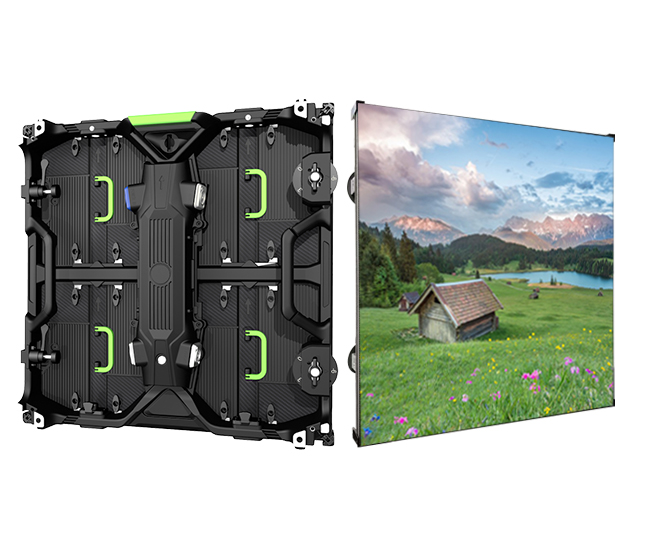
II. Scientific calculation of viewing distance of Rental Led Screen
The viewing distance needs to take into account visual comfort and picture detail recognition. The following two methods are commonly used:
1. Industry experience formula
The closest viewing distance (clear pixel recognition):
The closest distance (meter) = dot pitch (mm) × 1000 ÷ 1000
For example, the closest viewing distance of P3.91 screen is 3.91 meters, and pixel particles may be seen below this distance.
The best viewing distance (overall sense of the picture):
The best distance (meter) = dot pitch (mm) × 3000 ÷ 1000
For example, the best viewing distance of P3.91 screen is 11.73 meters, and the picture is delicate and grainless within this range.
2. Calculation based on resolution and screen size
The vertical viewing angle is calculated by the screen height and resolution, and then the viewing distance is derived:
Calculate the number of pixels corresponding to the screen height. For example, a 1000mm high P3.91 screen has a vertical pixel count of about 1000÷3.91≈256 pixels.
Calculate the distance based on the vertical viewing angle of the human eye (recommended ≤30°):
Viewing distance (meters) = screen height (meters)÷(2×tan(15°))
For example, the viewing distance of a 1-meter high screen is about 1÷(2×0.2679)≈1.86 meters.
III. Typical product features and scene adaptation of Led Screen Rental
Take P3.91 and P1.9 small-pitch LED screens as examples to analyze their technical advantages and applicable scenarios:
P3.91 screen
Dot pitch 3.91mm, resolution density 64,000 pixels/㎡, optimal viewing distance 3.9-11.7 meters. Suitable for scenes such as conference rooms, exhibition halls, medium and large stages, cost controllable, suitable for long-distance viewing.
P1.9 screen
The dot pitch is 1.9mm, the resolution density is 274,000 pixels/㎡, and the optimal viewing distance is 1.9-5.7 meters. It is suitable for scenes such as command centers, high-end conference rooms, virtual shooting, etc. The picture is extremely delicate and suitable for close-range high-definition display.
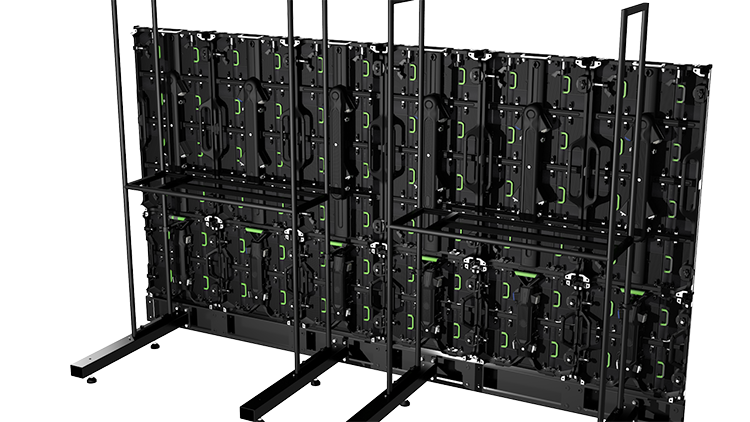
Differentiated design of P3.91 500×1000mm panel
Lightweight and fast deployment
The weight of a single module is ≤15kg, and it supports single-person hoisting; the positioning pin design makes the module splicing accuracy reach ±0.1mm.
High protection
The corner guard device can withstand a 1-meter drop impact; the bottom gap design prevents damage to the LED lamp beads during transportation.
Flexible splicing
Supports mixed splicing of 500×500mm and 500×1000mm cabinets, and can build curved screens (curvature radius ≥2 meters) or special-shaped screens.
High refresh rate guarantee
The 3840Hz refresh rate eliminates shooting moiré and meets the needs of 4K/8K video live broadcast.
4. Selection recommendations and cost optimization
Select dot spacing based on viewing distance
When the audience is ≤5 meters away from the screen, it is preferred to select small pitch below P2.5; when the distance is >10 meters, P3.91 or larger dot spacing products are more cost-effective.
Balance resolution and cost
If you need to display text as the main feature, you can appropriately reduce the resolution (such as P4.81); if you need to play high-definition video, the recommended resolution is ≥1920×1080 (corresponding to a P2.5 screen of about 2.3 meters high).
Maintenance convenience
The front maintenance design (such as magnetic suction module) can save more than 50% of maintenance time and is suitable for high-frequency use scenarios.